

Research-to-Content Automation AI-Assisted Marketing Workflow System at Harvard D^3
Overview
Designed an end-to-end AI automation system eliminating manual research monitoring — delivering publish-ready social copy, AI insights, and brand-consistent Canva assets directly to the marketing team via Slack
Problem
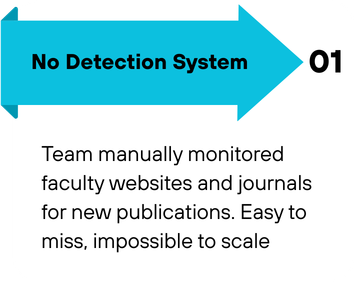
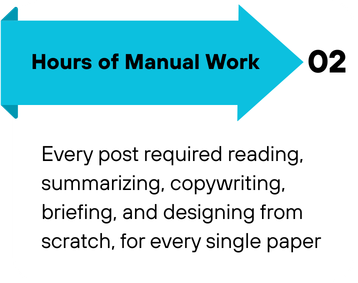
At Harvard D³, faculty and researchers regularly publish high-impact work — but the marketing team had no automated way to know when new research went live. Every post started from scratch: someone had to manually find the paper, read it, extract key insights, write platform-specific copy, brief a designer, and create assets — all before anything could be published.
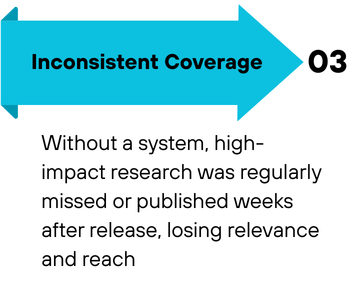
The result was inconsistent coverage, missed publications, and a team spending 3–5 hours per week on a process that should have taken minutes. High-impact research was regularly going unnoticed on social channels simply because the pipeline was broken.
My Approach
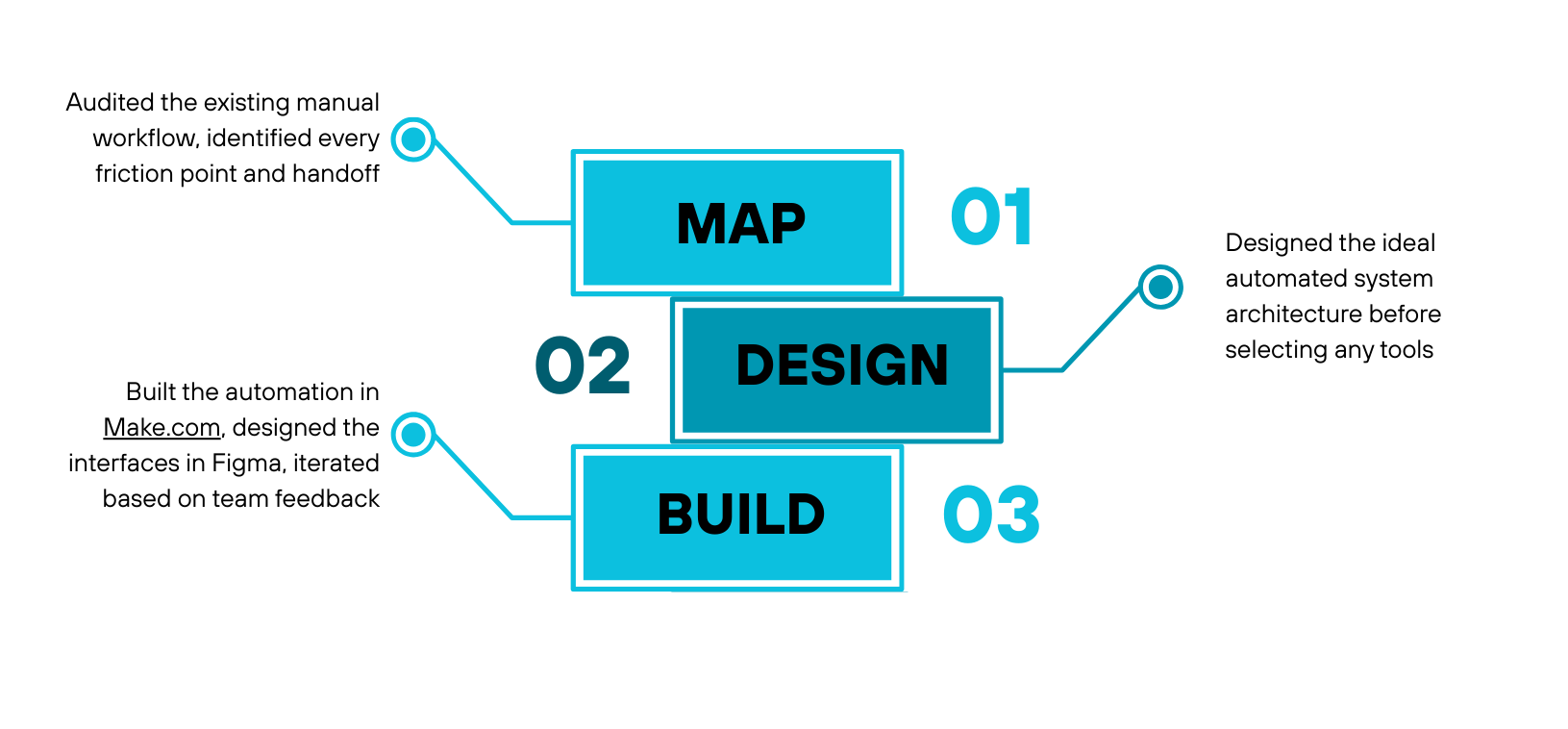
I mapped the existing workflow end to end, every step, every handoff, every point of friction. What I found was that the problem wasn't effort or skill, it was architecture. The team was talented but working inside a broken system with no automation, no standardization, and no visibility.
My approach was to design the system first and build it second. I defined the ideal workflow from research detection to published post, identified which steps could be automated, which required human judgment, and where AI could genuinely add value — rather than just adding complexity.
System Architecture
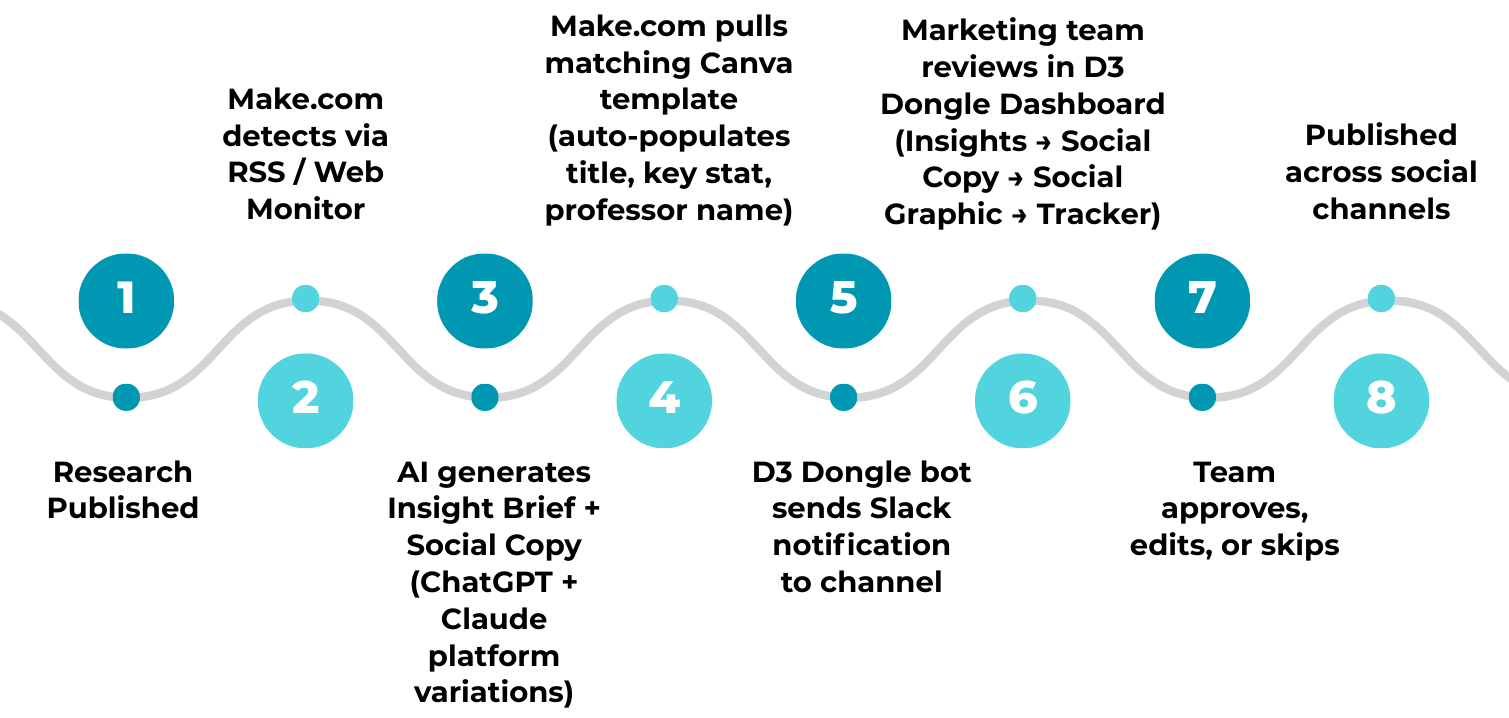
The system I designed connects six stages each one feeding directly into the next, with human review built in at exactly the right moment. The marketing team stays in control of creative decisions while the system handles everything that doesn't require human judgment.
The Interfaces
Each screen was designed around a specific job-to-be-done — from instant awareness to deep review to pipeline oversight. Together they form a complete system that requires zero new behavior from the team.
Entry Point
The moment Make.com detects a new publication, the D3 Dongle bot fires a structured alert into the #Research_Corner channel. The notification surfaces the professor name, paper title, key insight, three social copy links, and a direct Canva template link — all in one message. The team can approve, edit, or skip without leaving Slack.
Design decision: Slack is where the marketing team already lives. Making it the primary entry point meant zero onboarding, zero friction, and immediate adoption from day one.
Insight Brief
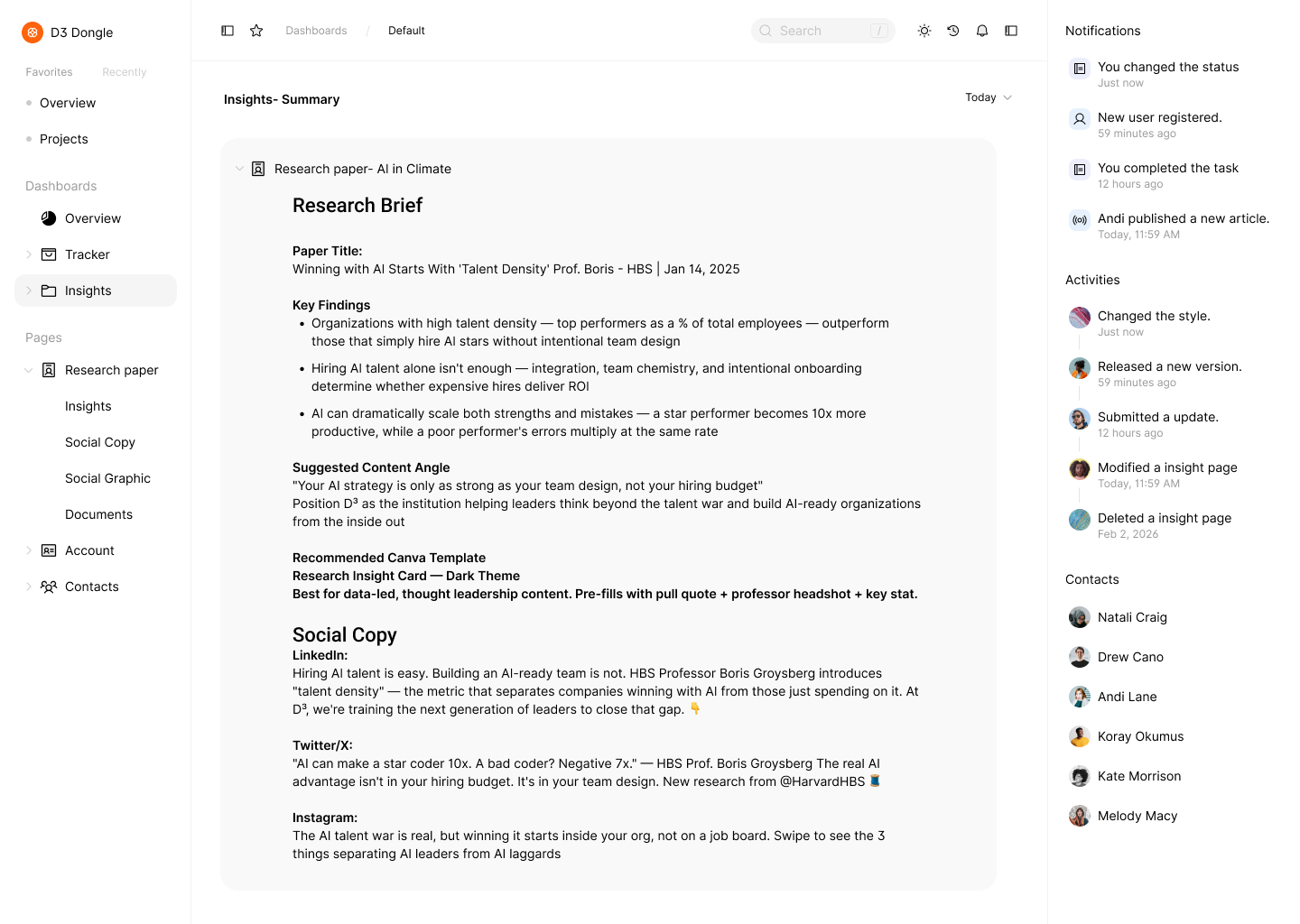
For publications requiring more careful review, the team opens the D3 Dongle dashboard. The Insights page surfaces the full AI-generated research brief; paper title, key findings, suggested content angle, recommended Canva template, and all three platform copy variations in one scrollable view. Sub-pages for Insights, Social Copy, Social Graphic, and Documents keep everything organized per publication.
Design decision: Structured the brief to mirror how a creative director would brief a team — not just raw AI output. The content angle and audience note push the marketer toward strategic decisions rather than reactive posting.
Social Copy + Canva Preview
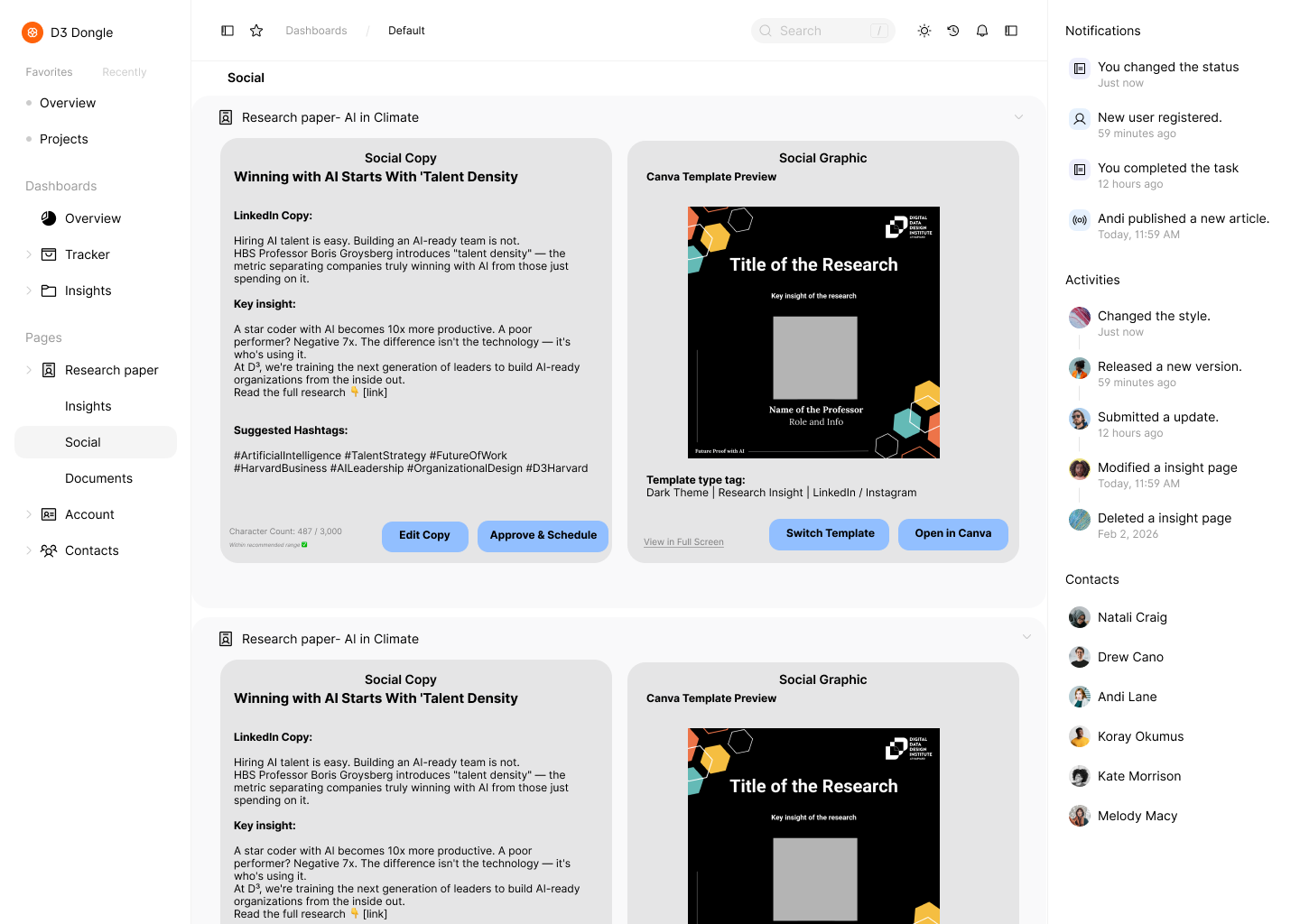
The Social page shows AI-generated LinkedIn copy alongside the pre-loaded Canva template preview in a split view. Character count, suggested hashtags, Edit Copy, and Approve & Schedule buttons give the marketer everything they need to review and approve in one screen. The Canva template auto-populates the research title, key stat, and professor name which are ready to open and customize with one click.
Design decision: Placing copy and visual in the same view lets the marketer check tone, message, and design alignment simultaneously, catching inconsistencies before they reach the audience, not after.
Tracker Dashboard
The Tracker gives team leads a full pipeline view across every research publication — author, title, date, channel, and status (In Progress / Complete / Pending / Approved / Rejected) — all in one table. Coverage gaps are immediately visible, nothing falls through the cracks, and the team lead can see exactly where every piece of content stands without chasing anyone for updates.
Design decision: This screen was designed specifically for the team lead, not the individual marketer. The goal was to make the entire content operation visible at a glance, shifting the team from reactive firefighting to proactive pipeline management.
Impact
From 3–5 hours to under 30 minutes
~80% Reduction in time from research publication to publish - ready content brief
100% Of publications now detected automatically - zero manual monitoring
3x More research publications covered consistently across social channels
0 New tools the marketing team had to learn - entire workflow delivered via Slack
Beyond the time savings, the system fundamentally changed how the team operates. Coverage became consistent and proactive rather than reactive and inconsistent. The team shifted from spending time on low-value mechanical tasks to focusing on creative refinement, strategic decisions, and audience engagement — the work that actually requires human judgment.
Reflection
The most important design work on this project happened before I opened Figma. Mapping the existing workflow, identifying the right automation touchpoints, and deciding where human judgment should be preserved — those decisions determined whether the system would actually work in practice.
I also learned that the best automation is invisible to the people using it. The marketing team didn't need to understand Make.com or AI APIs — they needed a Slack message that made their job easier. Designing for that simplicity required more complexity under the hood, not less.
What worked well
Keeping Slack as the single entry point dramatically reduced adoption friction. The team started using the system immediately because it required zero behavior change.
What I'm working on next
A direct scheduling integration from the Tracker dashboard to social platforms — so approved content publishes automatically without the final manual step. I'd also add an analytics feedback loop pulling post engagement data back into the Insights brief, helping the team understand which content angles and Canva templates consistently drive the highest engagement over time.