

D^3 at Harvard Lifecycle Growth Ecosystem
A multi-channel growth system spanning social, landing pages, and CRM email — designed to drive acquisition, engagement, and retention at scale
Overview
D3 set out to expand awareness of its AI learning modules and establish itself as a trusted voice in emerging AI technology. Beyond brand visibility, the objective was to drive measurable subscriber growth, increase event registrations, and build a scalable lifecycle communication system that could support ongoing engagement across multiple touchpoints.
Rather than treating this as isolated campaign work, I designed a connected growth ecosystem spanning paid and organic social, lead generation landing pages, CRM email systems, and event promotion flows. My role focused on building the acquisition and engagement layer that connected these channels into a cohesive user journey.
Growth Strategy & Lifecycle Architecture
Social Creative Strategy
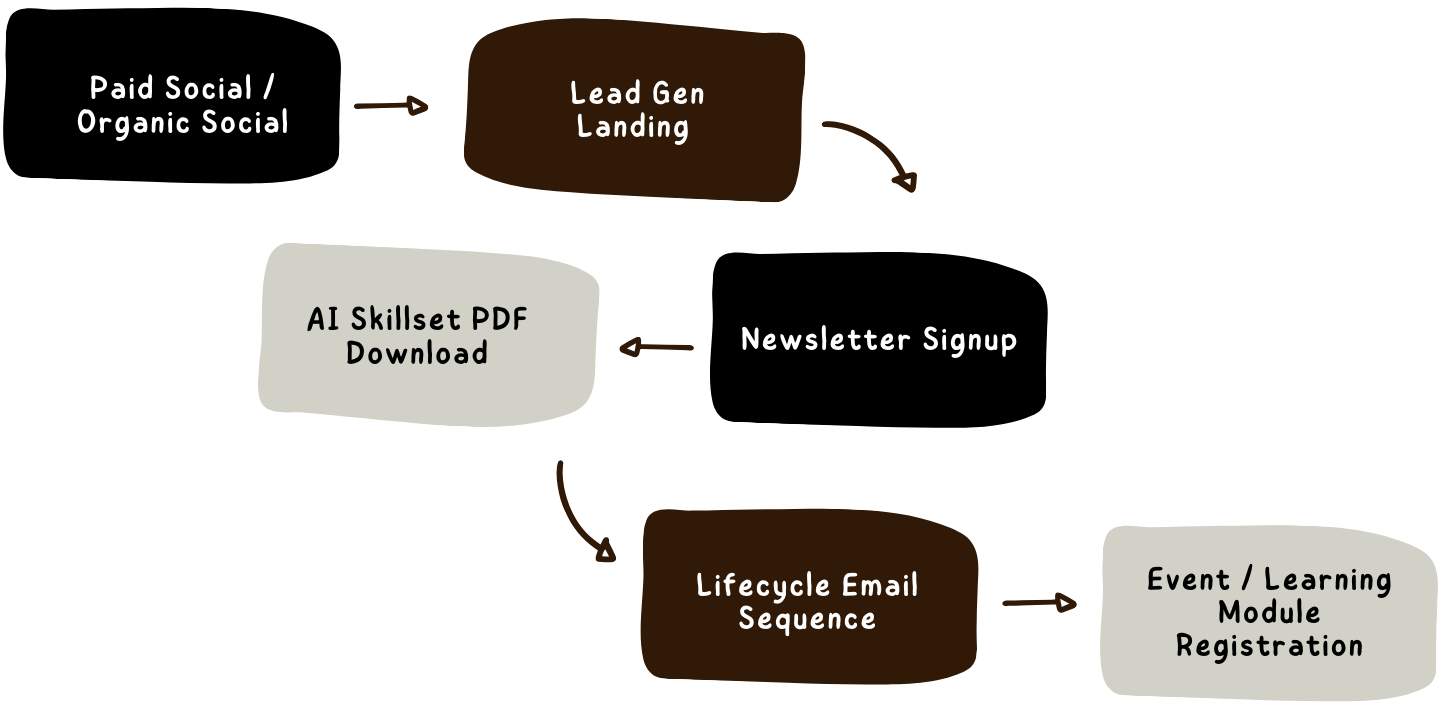
I began by mapping the full user journey from awareness to retention. Social campaigns (both paid and organic) directed users to focused lead generation landing pages promoting AI learning modules and downloadable AI skillset resources. Once users converted, they entered a structured lifecycle flow that included a welcome email, resource delivery, follow-up promotions, and ongoing newsletters.
By designing this ecosystem holistically, each touchpoint reinforced the next. Messaging remained consistent across channels, and every interaction was structured to move users forward in the funnel — from discovery to meaningful engagement.
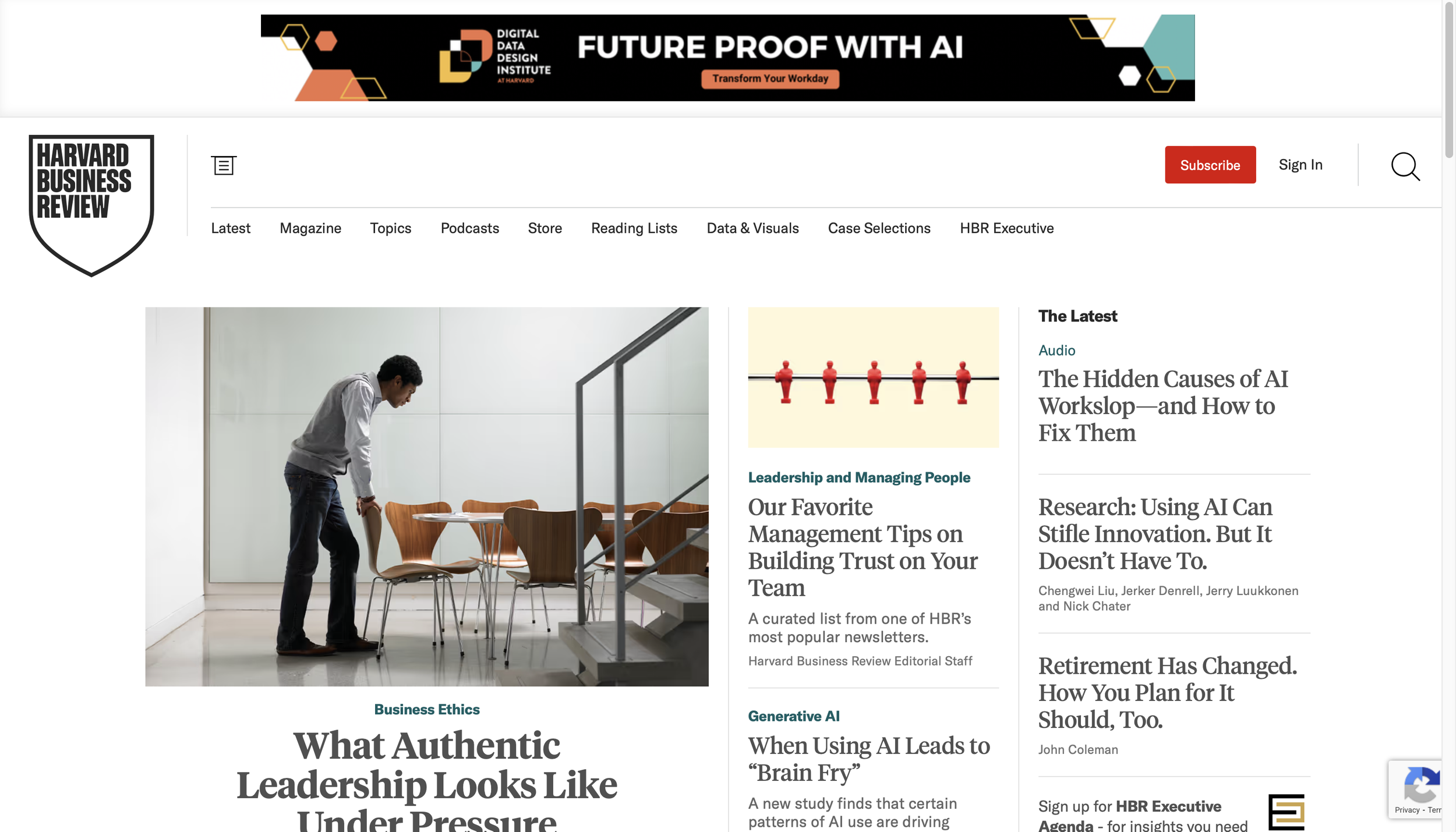
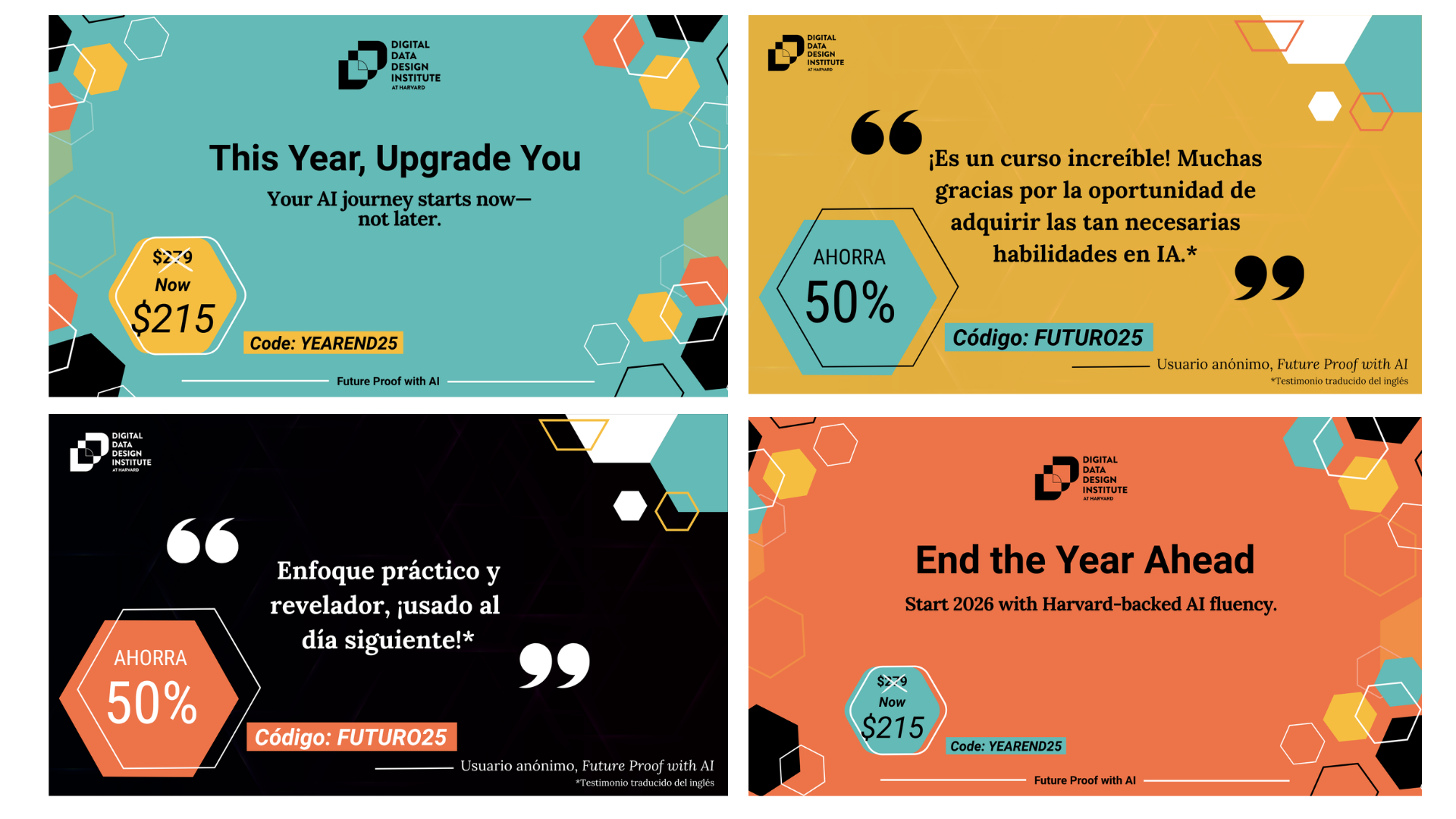
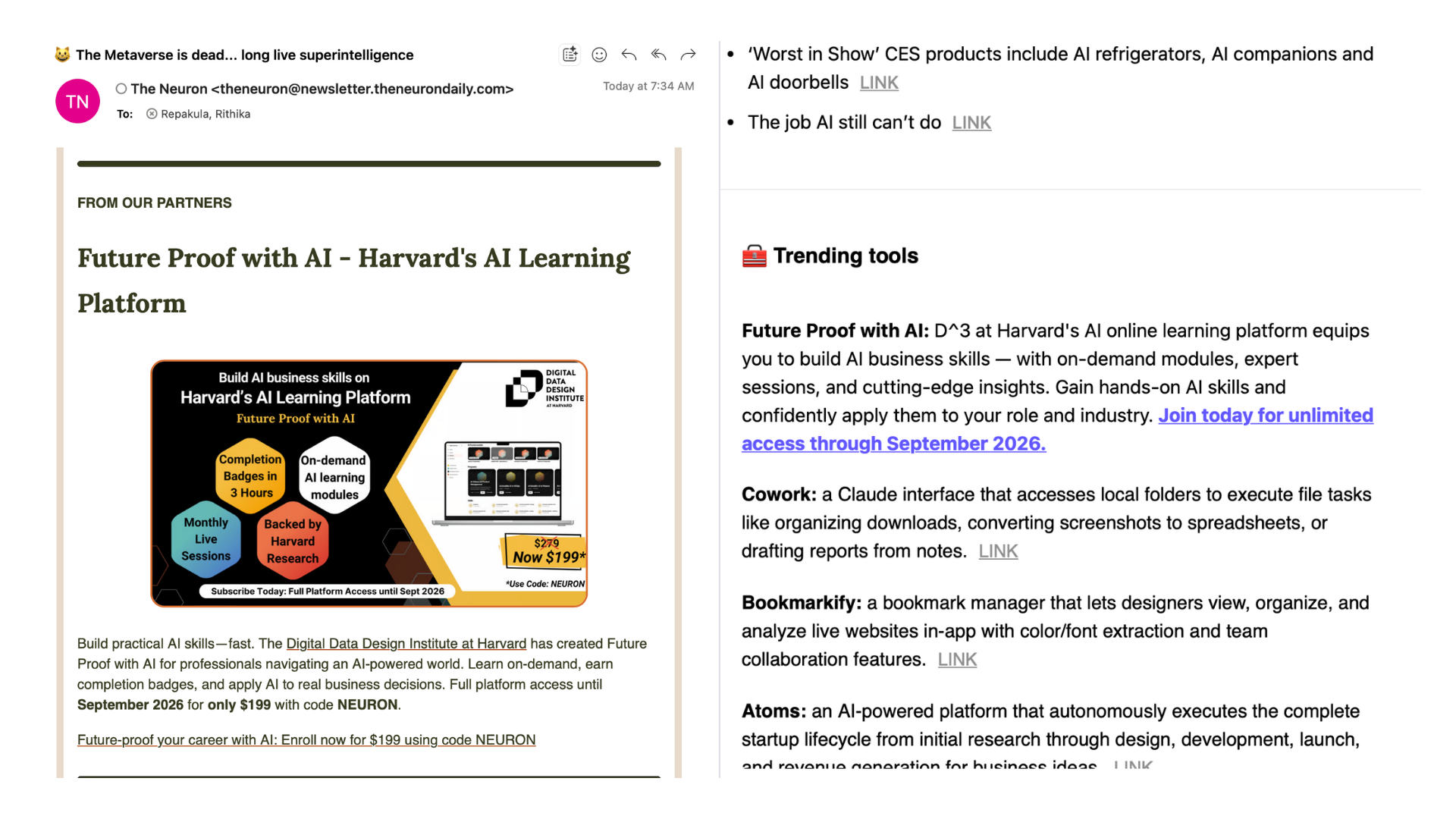
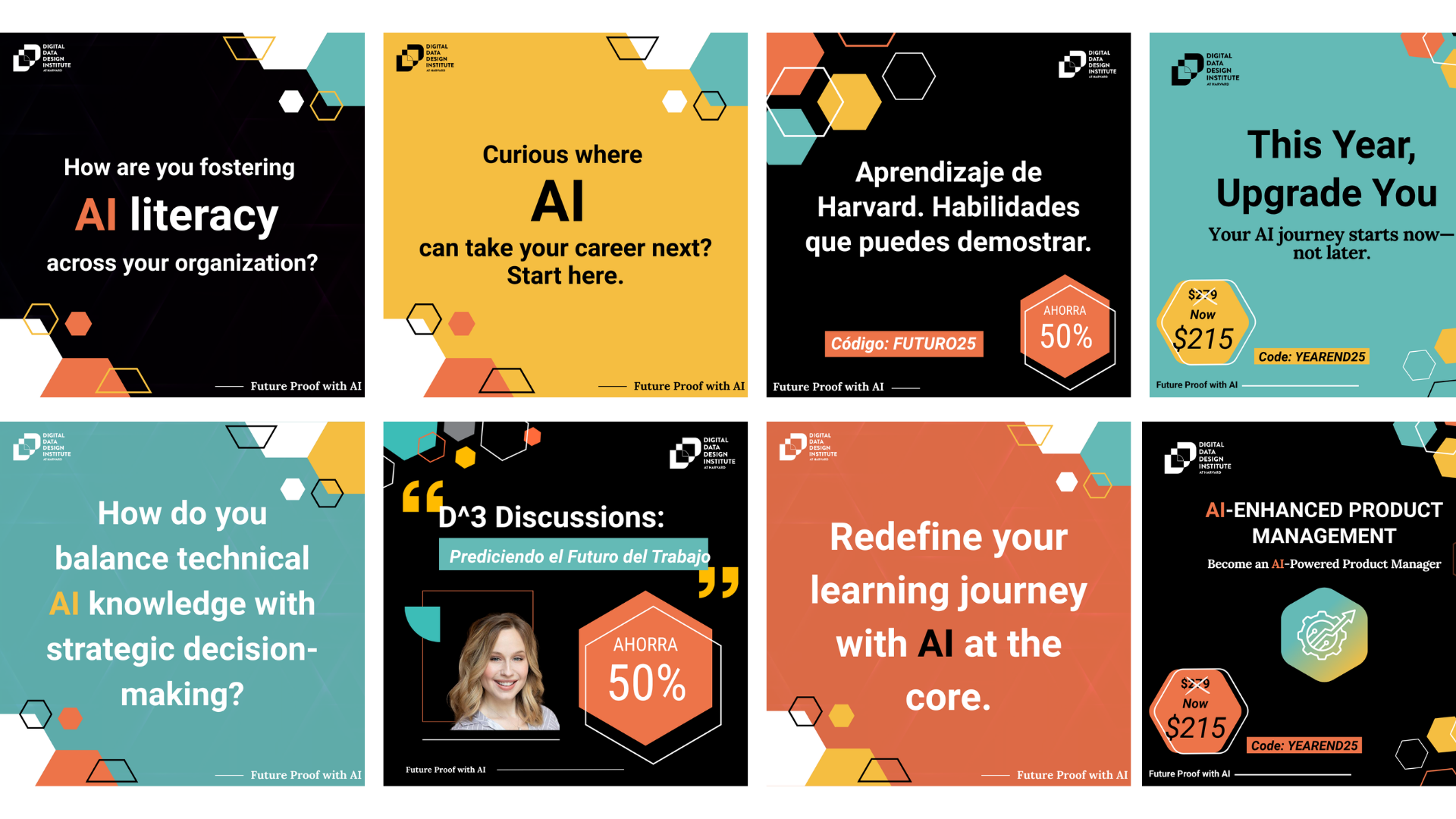
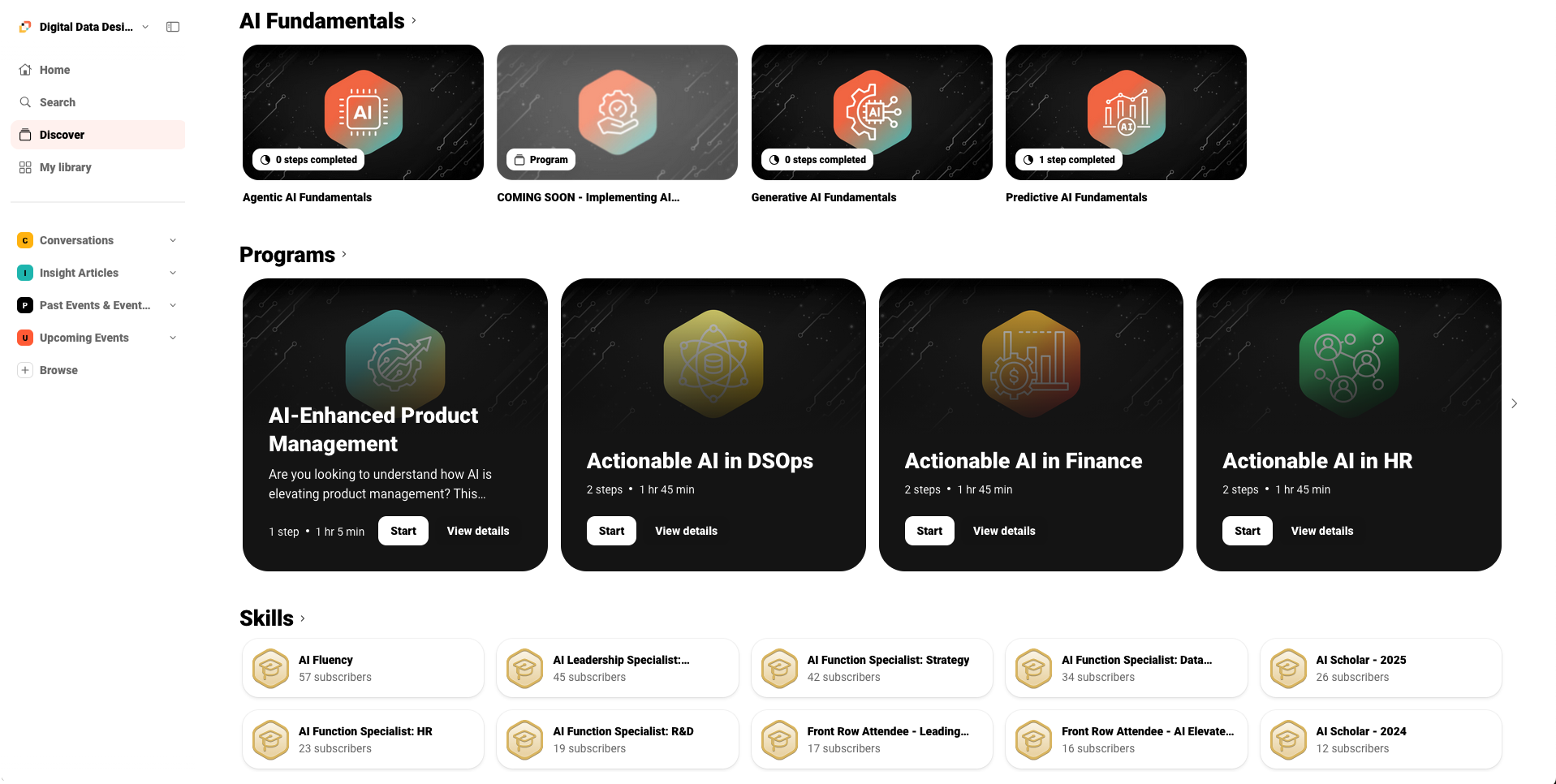
To drive awareness and traffic, I designed paid and organic social assets that promoted D3’s AI learning programs and upcoming conferences. The creative emphasized clarity, strong hierarchy, and benefit-led messaging designed to quickly communicate value in fast-scrolling environments.
Each asset aligned visually and strategically with its corresponding landing page, ensuring continuity in tone and user expectation. Variations were created to support testing and performance iteration, with messaging refined based on engagement insights and audience response. Mainly advertised on HBR, Neuron Newsletter, LinkedIn and Instagram.
Lead Generation Landing Page
The AI Skillset landing page was designed to convert campaign traffic into qualified subscribers. The layout prioritized a clear value proposition, minimal form friction, and strong CTA hierarchy. Social proof and credibility cues were incorporated to reinforce trust.
This page served as the primary entry point into the lifecycle system, directly contributing to subscriber growth and resource downloads.
CRM Email Design & Lifecycle Integration
Following conversion from the landing page, users entered a structured email sequence designed in Figma and implemented in Mailchimp. I developed a modular component system that allowed marketing teams to assemble campaigns efficiently while maintaining visual and structural consistency.
Templates included reusable header modules, promotional blocks, content sections, CTA components, and compliant footers. The system supported onboarding messages, resource distribution, conference reminders, and ongoing newsletters. The system scaled to support 50+ email templates across all flows, designed in Figma and implemented in Mailchimp.
Responsive Design & Technical Constraints
Email environments introduce unique design constraints, including client rendering inconsistencies and image fallback behavior. Each template was designed with responsive stacking logic, accessible typography, and safe visual spacing to ensure clarity across desktop and mobile environments.
CTA visibility and scannability were prioritized to support engagement regardless of device context.
Performance & Iteration
Using Mailchimp analytics, I tracked open rates, click-through behavior, and subscriber growth patterns across 150+ campaigns. Insights directly informed layout decisions; simplifying the newsletter pop-up and refining value-driven copy contributed to consistent subscriber growth. Adjusting email hierarchy and CTA prominence improved click behavior over time. All design decisions were guided by data while preserving brand integrity and user trust.
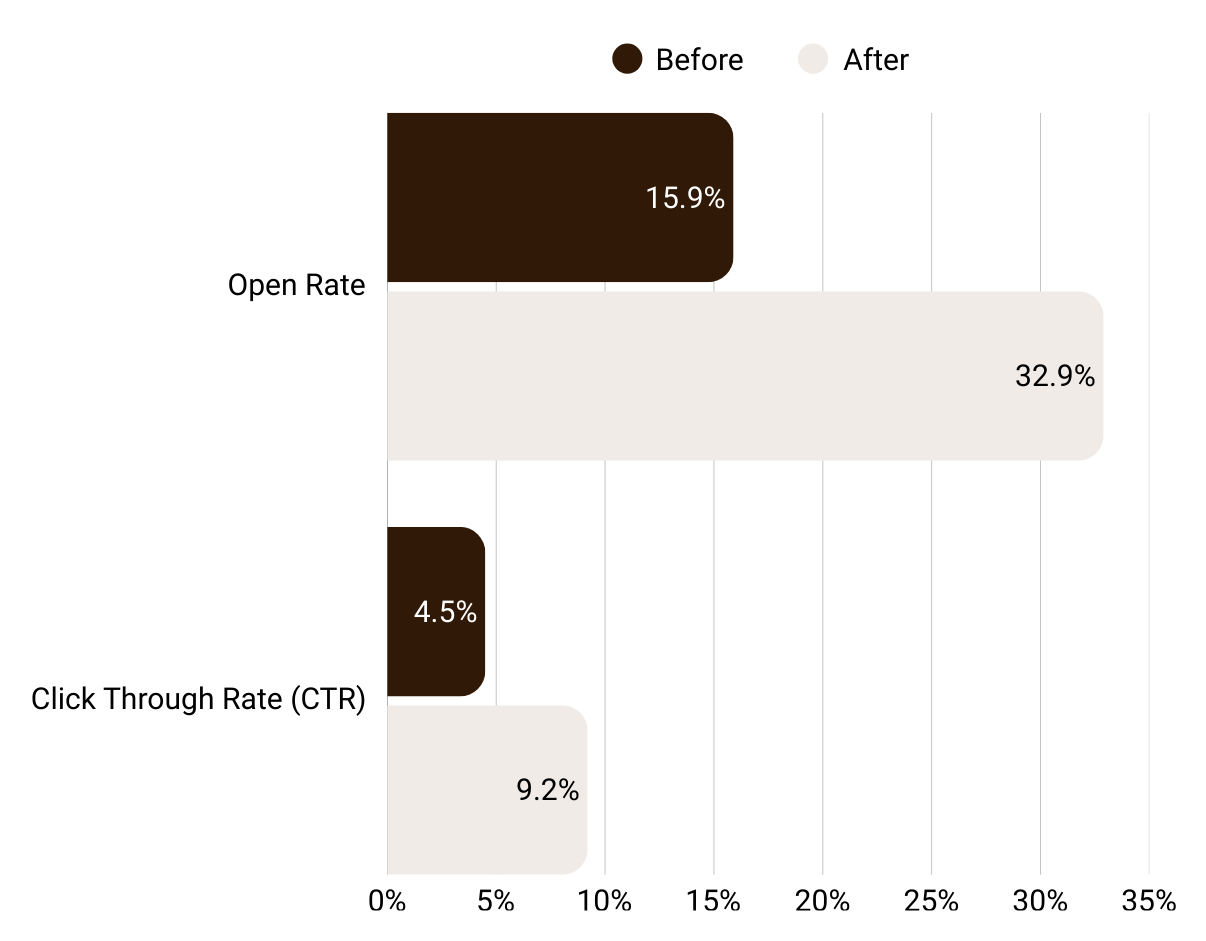
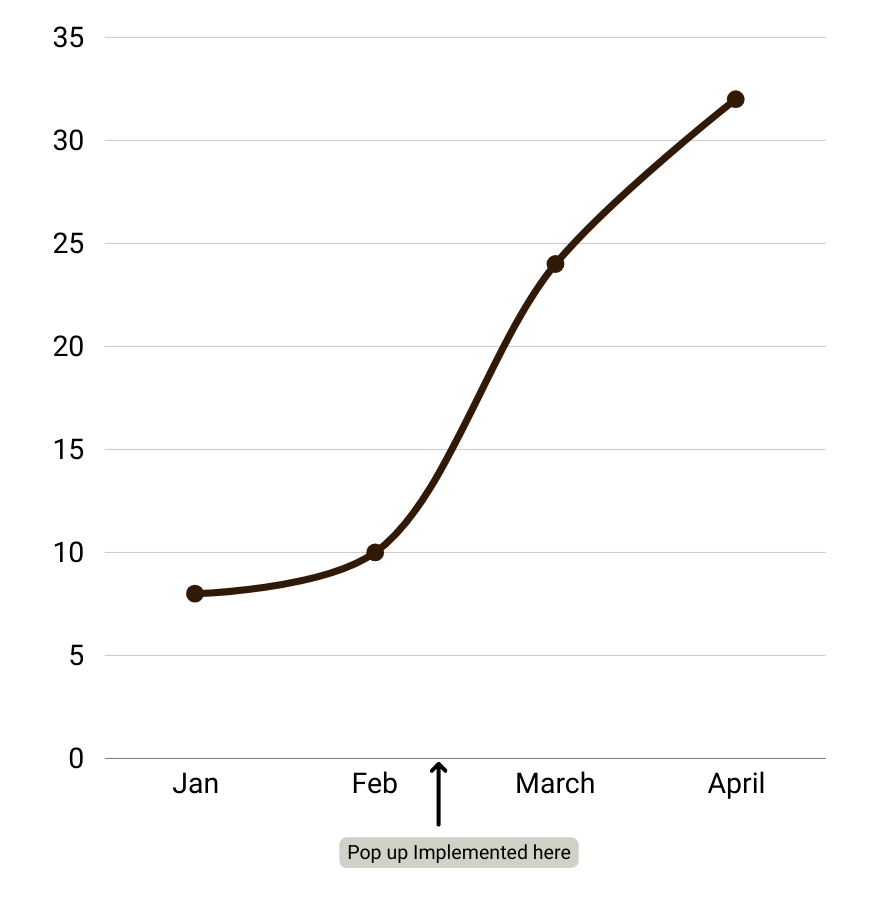
Subscriber Growth
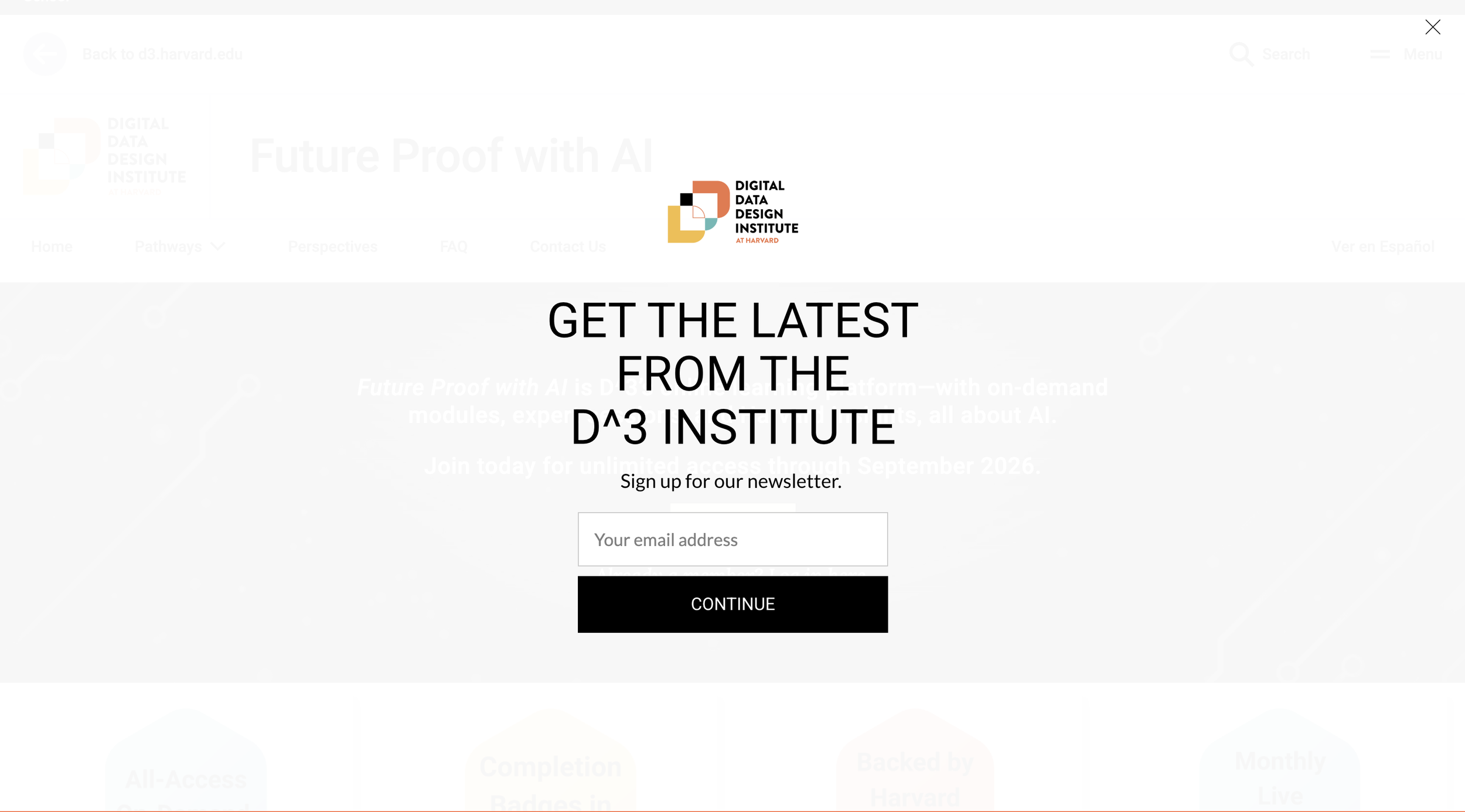
Newsletter Email Pop-Up on Website
Impact
This lifecycle system supported 150+ campaigns and 50+ email templates over two years, reaching a subscriber base of 50,000+ — with open rates consistently in the 15–18% range. By treating CRM design as a system rather than a single deliverable, the solution strengthened alignment between design and performance goals. Thus, improving subscriber acquisition, streamlining campaign production, and delivering measurable engagement outcomes at scale.
Reflection
This project reinforced my belief that effective CRM and growth design require systems thinking. Acquisition, messaging, and retention are interdependent. When structured thoughtfully, each touchpoint becomes part of a cohesive experience that balances clarity, scalability, and measurable business impact.